If you knew nothing about managing menstruation with a disability, what would you need to know? The best answers come from lived experiences. Before conducting any activity with persons with disabilities, ask them what they need for your interventions and involve them in planning.
“It is estimated that one in five women lives with a disability.” World Health Organisation (WHO). 2011. World Report on Disability.
Despite the vast scale of this population, many persons with disabilities who menstruate still struggle to manage their periods with dignity and autonomy. This difficulty is largely a consequence lack of tailored services. Other issues include inaccessible washrooms, lack of support, and the stigma around both periods and disability make menstruation even harder. These difficulties can be further worsened by discrimination based on gender, age, or ethnicity
Basis in Human Rights and Policy
The Convention on the Rights of Persons with Disabilities explains that people with long-term physical, mental, intellectual, or sensory differences may face social barriers that limit their participation in everyday life. This includes managing menstruation safely and with confidence.
The New Menstrual Health Practitioner’s Guide
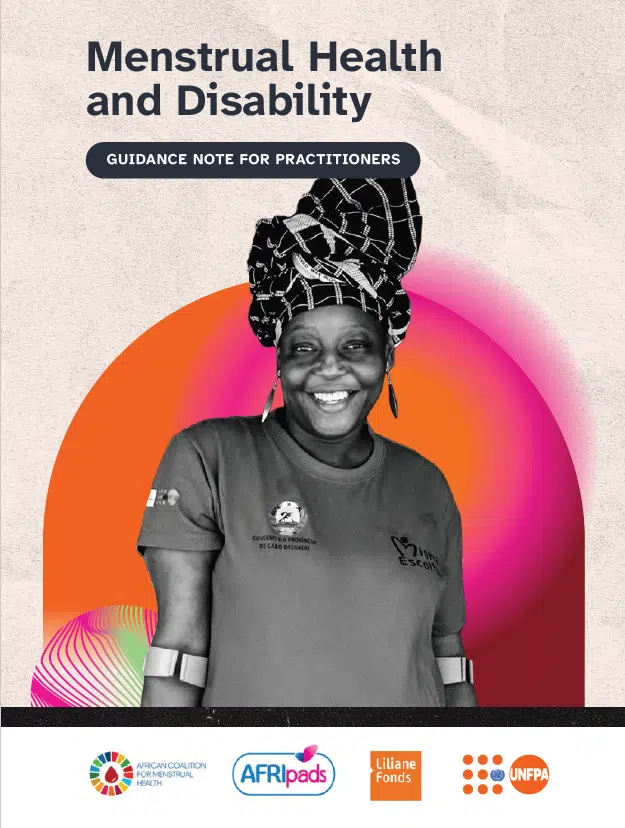
This guide helps health workers understand these challenges and design menstrual health programmes that meet the needs of women and girls with disabilities. Without this support, many are left without the right information, materials, or safe spaces.
The guide builds on:
- UNFPA works in East and Southern Africa on sexual and reproductive health for young persons with disabilities
- UNFPA guidelines on gender-based violence and reproductive health services
- UNICEF guidance for girls and women with disabilities, including the Disability Awareness Checklist
Different disabilities bring different needs, as explained below:
- Physical disabilities may impair the ability to place or change menstrual products independently.
- Sensory disabilities, such as visual impairments, may make it difficult to detect when a period begins or when a product needs changing.
- Cognitive or intellectual disabilities often require clear, accessible information and sustained support to build confidence.
- Neurodevelopmental conditions such as autism may involve sensitivities to textures or smells, complicating the use of certain products.
These challenges are further intensified by systemic barriers, such as double stigma, physical obstacles, inaccessible products, social and emotional stress, low income, limited teaching materials, and minimal representation in decision-making.
Meeting these Needs
Addressing these challenges requires careful planning and inclusive design to support the diverse needs of persons with disabilities.
For example, at AFRIpads, we:
Ask partners about accessibility needs before any virtual or in-person events to ensure all participants are supported during sessions. We also conduct feasibility and acceptability studies before distributing products to ensure they meet the users’ needs.
More efforts to include supportive systems, easy-to-use menstrual products, clear visual or tactile guides, safe facilities, and simple teaching tools. The guide encourages co-design with persons with disabilities and their organisations, adapted materials, strong family involvement, better data collection, inclusive policies, and the Twin-Track approach.
“The Twin Track approach integrates disability inclusion into mainstream menstrual programmes while providing tailored support for those who need it.”
By addressing the barriers faced by persons with disabilities, practitioners can help create a world where everyone has the knowledge, support, and materials needed to manage menstruation with dignity.